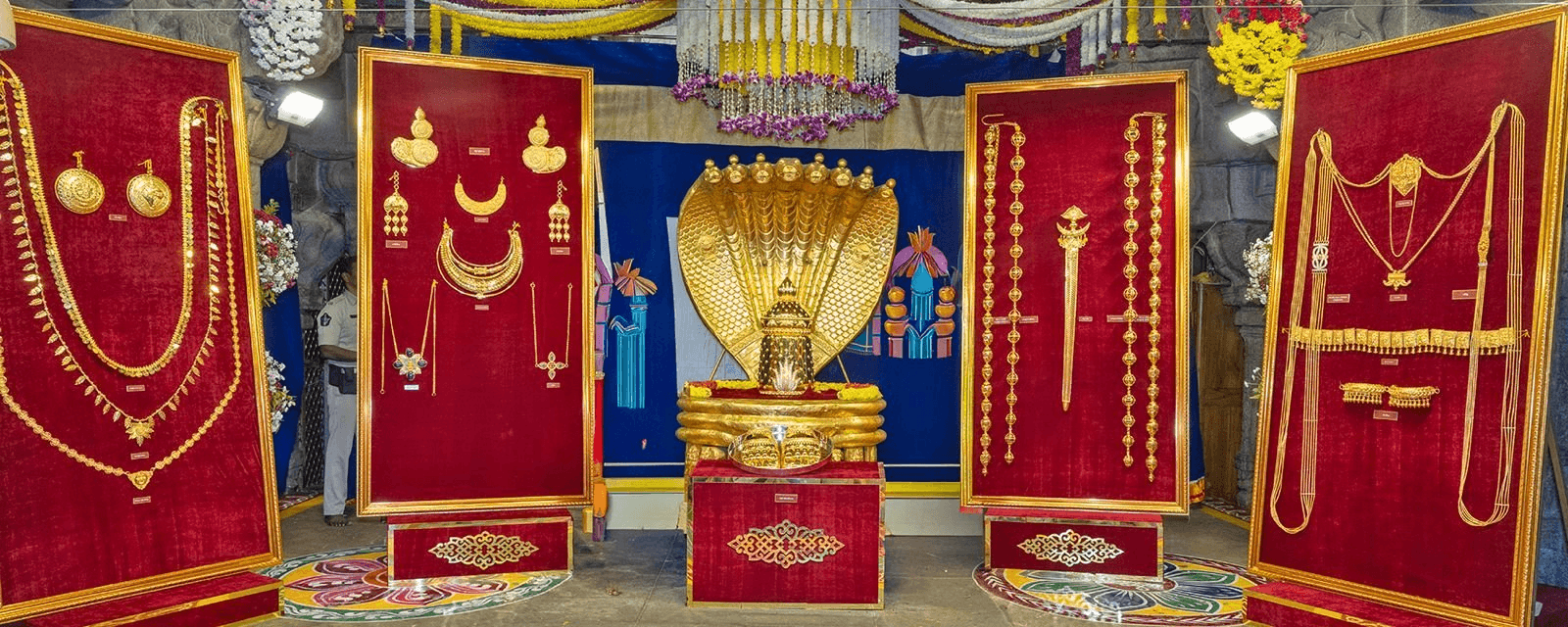
On Thursday, as the Chief Minister of Andhra Pradesh looked on, a Chennai businessman and his wife handed over nine sets of gold ornaments to the Tirumala Tirupati Devasthanams. The ornaments range from a crown to the Padma Paadalu at the Lord's feet. They weigh 121 kilograms, carry 238 carats of diamonds, and are valued at about ₹208 crore. No single devotee in the temple's recorded history has given more.
Within hours, a familiar argument broke out online. One side asked how anyone could justify more gold for a deity already adorned with some 120 kilograms of it every day, in a country where nearly one in ten people is undernourished. The other side answered that faith is private, and that nobody audits the crores spent on weddings, cars and cricket boxes.
Both sides are arguing past the real issue.
The donor is not the problem
Start with the man at the centre of the storm. Vardhaman Jain, founder of the healthcare services firm Access Healthcare, is no stranger to giving where the need is plainest. He is managing trustee of the Kanchi Kamakoti CHILDS Trust Hospital in Chennai, which treats children from poor families. His family foundation funds education, hunger relief and emergency medical care. At Tirumala, he has already given to the trust that feeds pilgrims, ₹6 crore to TTD's devotional channel and cow-protection trust, and an electric bus for pilgrims. A man with that record has earned the right to honour his Lord as he chooses. Cynicism about his motives says more about the cynics than about him.
Nor is adorning Srivaru a modern extravagance. Pallava, Chola and Vijayanagara rulers did the same for centuries, and their jewels are part of the temple's living history. For millions of devotees, adorning the Lord is not a waste of wealth. It is what wealth is for.
The gap the gold exposes
Yet the offering also throws a hard light on what happens at the foot of the same hill.
On busy days this year, pilgrims without tokens have waited 24 hours, and at times more than 30, for a few seconds of darshan. Tirumala has about 7,800 rooms and can house roughly 60,000 people, yet 80,000 to 90,000 pilgrims take darshan on a busy day. People travelling alone are not given rooms, and many rest on roadsides and open ground. In January 2025, six devotees died and about 40 were injured in a stampede at token counters in Tirupati.
Beyond the hill, the picture is starker. India ranks 100th of 122 countries in the 2026 Global Hunger Index, and 29 per cent of its children under five are stunted. The government disputes the index's method, but its own free-ration scheme now covers some 81 crore people, more than half the country.
Against these numbers, ₹208 crore is not an abstraction. TTD's new Venkatadri Nilayam cost ₹102 crore and houses 2,500 pilgrims free of charge, so the same sum could build two of them. At what the state's ₹5 canteens cost to run, it could feed about 78,000 people three meals a day for a year.
The real question is for TTD
None of this means the Jains chose wrongly. It means Tirumala's system of giving makes one choice far more visible, and far more celebrated, than the others. A crown is handed over before the Chief Minister and photographed for the nation. A donation to a rest house or a queue shelter, however large, rarely makes the news.
TTD can change that without asking anyone to give the Lord less. Every year, it should publish a priced list of what pilgrims still lack: shelters, queue sheds, medical posts, buses and kitchens. It should honour the donors who fund them with the same ceremony it gives to gold. It already has a cottage-donation scheme and a free-meal trust that runs on the interest from its deposits. Both deserve the spotlight that ornaments receive. And an institution with a ₹5,456-crore budget this year and more than 11 tonnes of gold in its care should not need one family's generosity to put a roof over its pilgrims.
Our tradition has long held that serving the Lord's devotees is serving the Lord. The Jains have given Srivaru a crown worthy of Him. The task now is to make sure the people who climb the hill to see it are treated with the same reverence.