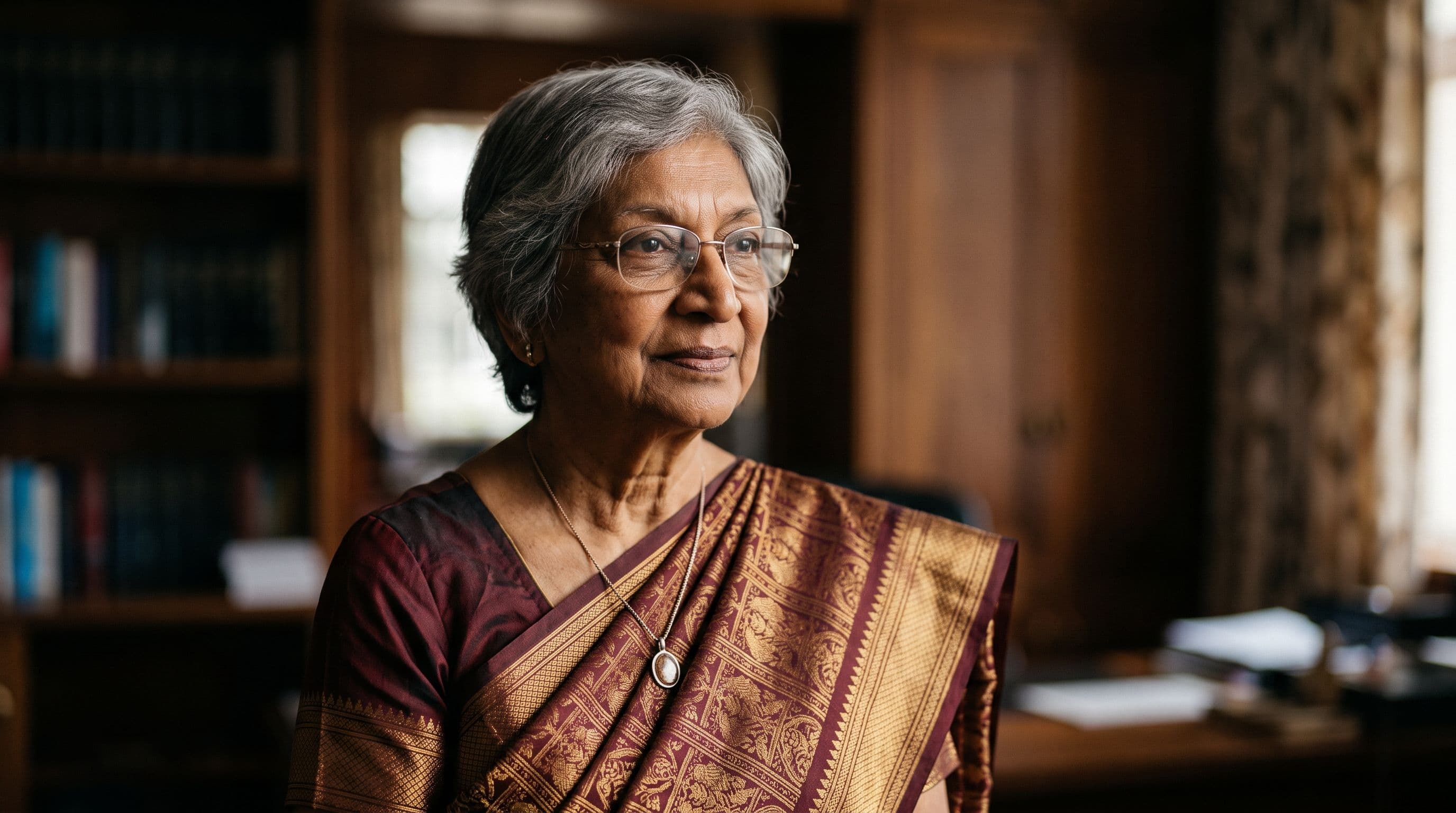
Editorial — Born in Durban into a modest family of Tamil descent, she fought in apartheid-era courts for the rights of Nelson Mandela's fellow prisoners. She became the first woman of colour to sit on South Africa's High Court, presided over the Rwanda genocide tribunal, and served as the UN's High Commissioner for Human Rights. On Friday, the Norwegian Nobel Committee awarded 85-year-old Navanethem "Navi" Pillay the 2026 Nobel Peace Prize. An honour for a woman of Indian origin should be a source of pride for all of us.
Yet within hours of the announcement, she was being called an antisemite and a bigot. Israel's foreign ministry went as far as saying that Nazi propagandist Joseph Goebbels would be applauding from hell.
What was her "crime"?
She said nothing about Jewish people. The UN commission of inquiry she chaired concluded that the Israeli government had committed genocide in Gaza. That is all.
This distinction matters, and it is being deliberately erased. Antisemitism is real, and it is rising. Synagogues need security guards. Jewish students face harassment. Hatred of Jews has an ancient and murderous history, and anyone committed to human rights must oppose it without hesitation. That is exactly why the word should not be spent on a legal finding one dislikes.
Three harms of the label
When every question about Israel's conduct in Gaza is answered with a charge of antisemitism, three things happen.
First, the question goes unanswered. How many civilians died, under whose orders, and with what intent are matters of fact and law. They belong before courts and investigators, not under a cloud of insults.
Second, critics are silenced by fear rather than evidence. Few journalists, academics or diplomats want the word "antisemite" attached to their name, and that is precisely the point of using it.
Third, and most damaging, the word loses its meaning. If a judge who spent years weighing evidence is lumped together with someone who attacks a synagogue, the term loses its power to name real hatred.
Disagreement is not hatred
Pillay's critics are entitled to dispute her conclusions. Israel firmly rejects the genocide finding, and that dispute is legitimate. Critics can question the commission's mandate and methods, or the fact that in 2022 Pillay defended a fellow commissioner who had questioned whether Israel should even be a UN member, remarks widely condemned at the time. These are fair grounds for argument. But disagreeing with a finding is different from declaring that the person who reached it hates Jews. The first is debate. The second is a way of ending debate.
One standard for every nation
The same standard must apply to every country. We would not accept that criticism of the Indian government's policies is hatred of Hindus. No one says that questioning Russia's conduct in Ukraine is hatred of Russians. Israel is a sovereign state with an army, a government and policies, and like every state it is answerable to international law. Placing it beyond question does not protect Jewish people. Instead, it ties the safety of Jews everywhere to the reputation of one government's military decisions. That is unfair to the many Israelis and diaspora Jews who are themselves asking hard questions about Gaza.
Peace requires justice
In announcing the prize, the Nobel Committee said it wanted to remind the world that peace requires justice. Justice requires that questions be asked, evidence be weighed, and findings be tested, including findings that powerful governments reject. Whether Pillay is right about genocide is for courts and history to decide. But trying to settle the matter by branding her a bigot is not an answer. It is an admission that there is no better one.