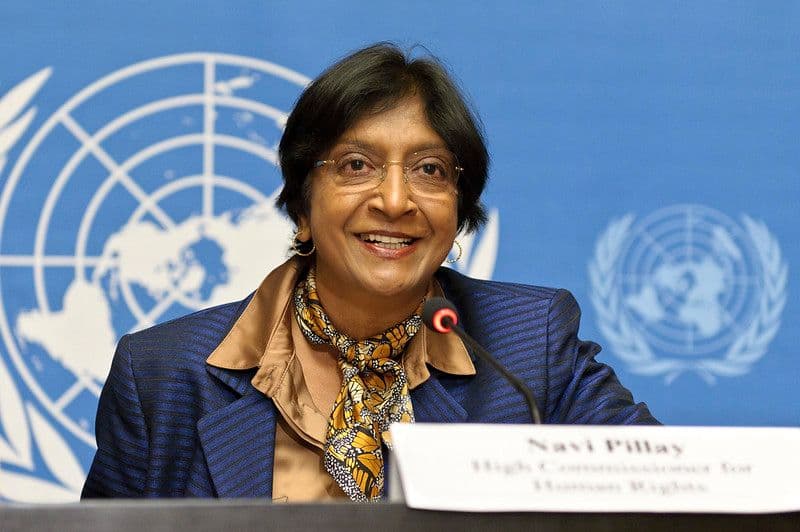
Oslo — The world's highest honour for peace went today to a woman whose story began in a modest Tamil household in Durban. On Friday, October 9, the Norwegian Nobel Committee awarded the 2026 Nobel Peace Prize to Navanethem "Navi" Pillay for her efforts to promote peace and international law. She will receive the prize in Oslo on December 10.
Roots in India, raised under apartheid
Navi Pillay was born in 1941 into a South African family of Tamil Indian descent, in the same Natal province where a young lawyer named Mohandas Gandhi once fought racial injustice. She was the fifth of eight children, and while many girls around her were married off young, her parents insisted that she and her sisters go to school just like their brothers. That decision changed history.
A career of firsts
In 1967 she became the first woman to open a law practice in her home province of Natal, defending opponents of apartheid when few would. She later became the first non-white woman judge on the High Court of South Africa, served as a judge on the International Criminal Court and presided over the International Criminal Tribunal for Rwanda. At the Rwanda tribunal, she helped deliver the landmark ruling that recognised rape as an act of genocide.
From 2008 to 2014 she served as UN High Commissioner for Human Rights. Today she sits as a judge on the International Court of Justice in the case where Myanmar is accused of genocide. In announcing the prize, Nobel Committee Chair Jørgen Watne Frydnes described her as among the bravest and most significant legal minds of our era.
A shared pride
She is the fifth South African to receive the Peace Prize, joining Chief Albert Luthuli, Archbishop Desmond Tutu, Nelson Mandela and F.W. de Klerk. For India and its global diaspora, she is proof of what the descendants of those who left Indian shores generations ago have built — and a reminder that the bond between India and South Africa, forged in the struggle against injustice, runs deep.
Why it matters now
This prize comes at a moment of wars, eroding trust in global institutions, and open hostility toward international courts. The committee noted that the very judges who uphold international law are now facing sanctions and attacks on their institutions, and that the world needs people of courage and determination like Pillay. Haakon Gjerløw, acting director of the Peace Research Institute Oslo (PRIO), said the award signals support for international courts and judges under political pressure.
Pillay dedicated the prize to survivors of international crimes and to those who defend international justice. At 85, she reminds us that the rule of law is not a given — it is defended, case by case, by people willing to stand firm.
Congratulations, Navi Pillay. — Andhravani